Weed wash operators wanted
$450 a day $3,150 for a 7-day week $18.75 an hour, paid for all 24 hours
Travel with our wash unit to wildfires and stay out in nature for the whole assignment. You run the station that gets mud and weed seed off fire engines and heavy equipment, so they don't spread noxious weeds. The unit is based in Williams, Arizona.
Bring a friend. Each station runs with at least two operators. You and a friend can apply and work together.
Apply now or call 928-988-6416
- Crew
- 2+ operators on site every operational period D.2.1.1(b)(4)
- Season
- Summer is when most of the work comes
- Day
- 24 hrs on the clock, nights at camp included
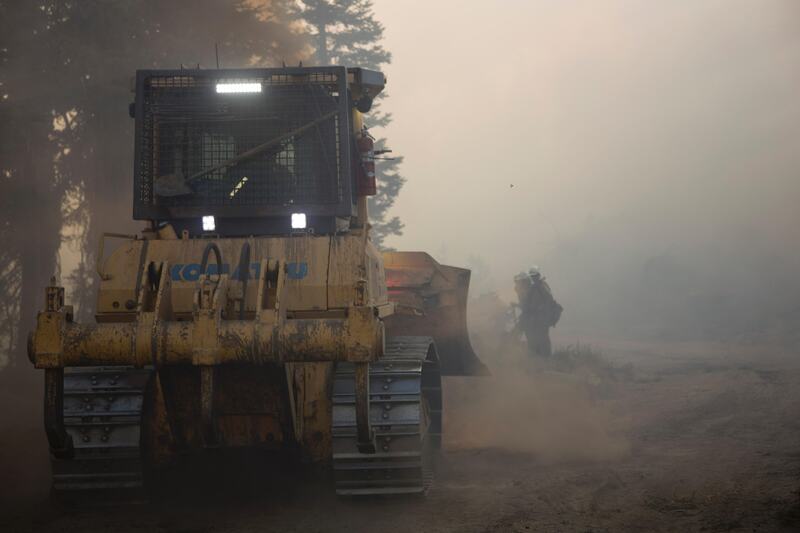
Work depends on fires and dispatch. We go out when a fire orders a weed wash unit and dispatch calls ours. Nobody can say ahead of time how much work a season will bring.
What you need
- Age
- Every operator must be 18 or older.
- Training
- No firefighting rating or fireline course. The agreement doesn't ask for either.
- Know-how
- Know how to run, maintain and repair the wash system safely, and be able to show you can handle all the waste it makes. D.2.1.1(b)(4)
- On site
- Be at the station through every operational period on the incident. D.2.1.1(b)(4)
- Clothes
- Closed-toe shoes (no sandals or flip-flops), a long- or short-sleeved shirt, and full-length pants or jeans. D.19(b)(1), D.19(b)(2)
- Language
- Speak English on the radio: every call on a government frequency is in English. Our representative on site, normally the foreman, must speak English and the crew's language well and read the incident action plan and safety alerts. D.3.2, D.13
- Safety
- Follow the safety standards in the agreement's Exhibit F. D.3(a)
- Conduct
- No alcohol at the incident, no drugs unless prescribed, nothing illegal under federal law, and no harassment of any kind. D.19.1
Out on a fire
- Season
- Most of the work comes in the summer. When dispatch calls, we roll out with the unit fully outfitted and washed clean of weed seed. D.7.1(a), D.15(a)
- Hours
- It's a 24-hour job. You stay the night out at the fire camp, and every hour is paid.
- The work
- Between vehicles you keep the station running, and you pack and label the solid waste. D.2.1(e)(6), D.2.1(e)(7), D.2.1(f)
- Rest
- At least one hour of rest for every two you work, and two days off before the 22nd day. More than 16 hours of work in 24 needs the incident commander's or agency administrator's approval, and no one drives more than 10 hours in a duty day. D.6.7(b), D.6.7(c), D.21.8.1.2(a)
- Camp
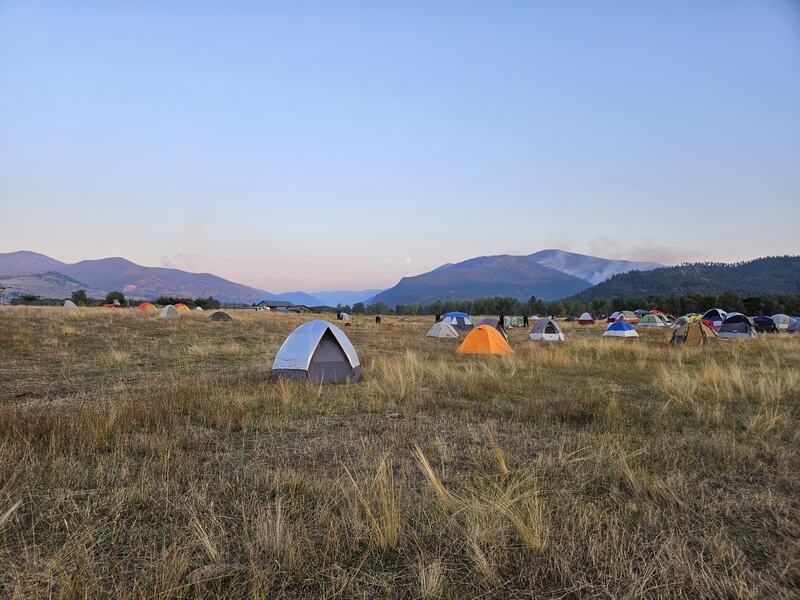
- On a fire, the Forest Service provides meals and a place to camp. We bring tents and sleeping bags, and food and drink for the trip in and your first shift. D.10, D.21.6(a)
- Covered
- We supply your safety gear, eye and hearing protection included. If you're hurt or sick on the job, we pay the medical bills and the ride to care. D.2.1(e)(9), D.14.1
- Going home
- When you're released, we get you back to where you were hired within 12 hours. D.19(c)
How a vehicle gets washed
Wash it down
Thoroughly wash vehicles/equipment (fire engines, heavy equipment, logging equipment, transports, pickups, SUVs, sedans) to remove soil, mud, plant parts, seeds, vegetation D.2.1(e)(1)
Clear the underside
Remove debris from undercarriage, cross members, frame, skid plates, belly pans, wheels, treads/tracks, suspension, bumpers, wheel wells, radiator grills, bumper ledges D.2.1(e)(2)
Check the hidden spots
Inspect hard-to-reach areas to ensure they are clean D.2.1(e)(3)
Clean the drafting gear
Inspect and wash all soil/plant parts off drafting hoses and drafting gear on engines and water tenders D.2.1(e)(4)
Log the vehicle
Maintain a daily record of all washed vehicles, using government forms if required D.2.1(e)(8)
The station you'll run, part by part 9

- 1Berms, 4+ in on all sides, to hold in the waste water D.2.1.1(a)
- 2Contained entry and exit so vehicles don't track residue out. A flat roll-through mat isn't allowed D.2.1.1(a)(4)
- 3Two wands, 1,000+ psi hand-held, for every surface of a vehicle D.2.1.1(a)(1)
- 4Underbody washer sprays at an angle so it reaches the whole underside D.2.1.1(a)(2)
- 5Up to 10 ft wide the wash has to take equipment this wide D.2.1.1(b)(5)
- 6Wash water, 2+ hours enough in the tank to run the wash without a break D.2.1.1(a)(3)
- 7Filter, 100 micron D.2.1.1(b)(1)
- 8Waste packages, 50 lb a full package of solid waste can't weigh more D.2.1.1(b)(2)
- 9At least two 1,000-watt lights on stands, with ground-fault protection D.2.1.1(b)(6)
Apply
It comes to us and nobody else. Only your name and phone number are required. Applying with a friend? Send one each, with the other's name under “Anything else”.
- Phone928-988-6416
- E-mail[email protected]
The fine print
Work duties 17
- Thoroughly wash vehicles/equipment (fire engines, heavy equipment, logging equipment, transports, pickups, SUVs, sedans) to remove soil, mud, plant parts, seeds, vegetation D.2.1(e)(1)
- Remove debris from undercarriage, cross members, frame, skid plates, belly pans, wheels, treads/tracks, suspension, bumpers, wheel wells, radiator grills, bumper ledges D.2.1(e)(2)
- Inspect hard-to-reach areas to ensure they are clean D.2.1(e)(3)
- Inspect and wash all soil/plant parts off drafting hoses and drafting gear on engines and water tenders D.2.1(e)(4)
- Ensure the wash system does not damage paint or electrical connections D.2.1(e)(5)
- Keep the wash station in repair and fully operational during the assignment D.2.1(e)(6)
- Capture, package, and label solid waste in secure transportable containers; dispose via host agency or designated site D.2.1(e)(7), D.2.1(f)
- Maintain a daily record of all washed vehicles, using government forms if required D.2.1(e)(8)
- Provide PPE to all personnel; ensure it is worn, operable, maintained, and cleaned at intervals to prevent unsafe conditions D.2.1(e)(9)
- Maintain the quality of recycled water and keep the containment system functional at all times D.2.1.1(b)(1)
- Filter waste water to 100 microns or smaller before disposal, per requirements of the authority having jurisdiction D.2.1.1(b)(1)
- Ensure process time to wash vehicles is sufficient to meet agreement requirements D.2.1.1(b)(3)
- Comply with all applicable OSHA regulations on operator safety; keep all segments operating with no missing parts D.2.1.1(b)(7)
- Maintain equipment in good repair meeting all standards established or incorporated by reference D.2
- Provide dependable equipment meeting all applicable state and federal motor vehicle/equipment laws D.4(a)
- Ensure heavy equipment operators manually clean tracks and belly pans before leaving the project site D.15(a)
- Decontaminate foot valve/draft hose before moving to a new water source in a different watershed, using hot power wash (140°F, 2 min), sun-drying, or a chemical solution D.15(c)
Requirements 12
- Provide at least two skilled operators to run the wash system D.2.1.1(b)(4)
- Operators must be knowledgeable in the safe operation, maintenance, and repair of the wash system D.2.1.1(b)(4)
- Operators must be able to demonstrate knowledge, skills, and abilities to manage all waste products from the washer system D.2.1.1(b)(4)
- Operators must be present at all times during incident operational periods D.2.1.1(b)(4)
- Contractor's job site foreman is the Contractor's Representative unless otherwise designated D.13
- Contractor's representative must proficiently communicate in English and the crew's language, and read/communicate the IAP, Safety Alerts, etc. D.3.2
- All radio communication on Government-assigned frequencies must be in English D.3.2
- Persons under 18 shall not perform hazardous or arduous duties during wildland fire management operations, including prescribed burns D.3(b)
- Comply with the Fair Labor Standards Act (29 CFR 570) when employing persons under 18 D.3(a)
- All personnel must comply with Exhibit F, Safety Standards D.3(a)
- Employees must wear closed toe shoes on assignment; sandals/flip flops not acceptable D.19(b)(1)
- Employees must wear clothing appropriate to conditions: long or short sleeve shirts and full-length pants or jeans D.19(b)(2)
Before dispatch 6
- Contractor is responsible for all personnel licenses, licensed equipment, materials, supplies, transportation, lodging, personnel, and supervision needed to meet agreement specs D.1(a)
- Self-status your availability/unavailability using the self-status function in the IROC database D.5
- Arrive fully outfitted with all required equipment and PPE – missing items make the resource noncompliant on arrival D.7.1(a)
- Have a complete copy of your most current agreement in your possession at all times D.8
- Vehicles/equipment must arrive washed and free of noxious weed seeds, with debris-collecting areas cleaned D.15(a)
- Draft hoses and foot valves must arrive at the incident or inspection point clean and dry D.15(b)
Hours, driving and rest 10
- Follow driving regulations and work/rest guidelines in the NWCG Standards for Interagency Incident Business Management D.6.6
- No driver drives more than 10 hours (behind the wheel) within any duty day D.21.8.1.2(a)
- Multiple drivers may share a duty day but none may exceed the individual 10-hour driving limit D.21.8.1.2(b)
- Driver must have at least 8 consecutive off-duty hours before a shift, except for critical suppression/safety needs D.21.8.1.2(c)
- Document fatigue-mitigation measures for personnel who exceed 16-hour work shifts D.21.8.1.2(d), D.6.7(b)
- Ensure personnel meet a minimum 2:1 work-to-rest ratio D.6.7(b)
- Hours worked exceeding 16 in a 24-hour period must be approved by the IC or Agency Administrator D.6.7(b)
- Provide two mandatory days off prior to the 22nd day of the assignment D.6.7(c)
- Any replacement personnel provided must be fully rested and meet work/rest and length-of-assignment guidelines D.6.7(c)(2)
- Document days off on the Interagency Incident Business Management Shift Ticket D.6.7(c)
Food and camp 1
- Provide sufficient food & drink for your employees during travel and the first shift of the incident (not reimbursed) D.21.6(a)
On the incident 5
- Prevent harassment of any form; no non-prescription or Federally unlawful drugs or alcohol at the incident D.19.1
- Refer all media inquiries and public statements about incident activities to the Government's designated PIO D.19(d)(2)
- Ensure any authorized social media posts reflect professionalism and do not depict unsafe/unprofessional behavior D.19(d)(1)
- Do not post or disclose sensitive operational information D.19(d)(3)(i)
- Do not post commentary, condolences, or imagery about injuries/fatalities until after official agency notification/release D.19(d)(3)(ii)
The company's side 7
- Once released to the host dispatch center, do not accept new orders directly or seek reassignment D.6.9
- Be financially responsible for employee medical expenses and coverage D.14.1
- Be responsible for commercial medical transport costs if used D.14.1
- Provide operators with insurance forms, ID cards, and documents to accompany them if injured/ill D.14.2
- Return any terminated/released employee to the point of hire within 12 hours (or time specified) of release D.19(c)
- Sign the OF-297 Emergency Equipment Shift Ticket each operational period, listing each operator's name D.21.9.2
- Submit commercial invoices with an itemized breakdown of charges D.21.9.3
Equipment: wash system and water requirements 11
- Wash system must be self-contained with a recycling water system Catalog; D.2.1(b)
- System shall be high pressure with low volume, may be supplemented with low pressure/high volume; high pressure means above 1000 psi D.2.1(a)
- High volume means delivering 10 gallons of water per minute or more D.2.1(a)
- Berms or barriers containing waste water must be a minimum of 4 inches on all sides D.2.1.1(a)
- Portable commercial power washers with two hand-held, high-pressure wands/nozzles suitable for all vehicle surfaces D.2.1.1(a)(1)
- Underbody washer providing spray at an angle for complete coverage of underbody surfaces D.2.1.1(a)(2)
- Wash water storage tank with capacity to run the system continuously for a minimum of two hours D.2.1.1(a)(3)
- System must contain wash residue at entrance/exit so exiting vehicles don't track it; a flat roll-through mat is not allowed D.2.1.1(a)(4)
- Wash water must be filtered to 100 micron particle size or less, or use a clean water final rinse D.2.1.1(b)(1)
- Secure, easily transportable containment packaging/devices for solid waste, not to exceed 50 lbs when full D.2.1.1(b)(2)
- Wash system must be able to accommodate equipment up to 10 feet wide D.2.1.1(b)(5)
Equipment: safety and emergency equipment 6
- Minimum of two 1000-watt (or equivalent) work lights on stands with GFI module D.2.1.1(b)(6)
- All alternating current electric motors must be listed with Underwriters Laboratory D.2.1.1(b)(7)
- Every vehicle/equipment under hire must carry a securely mounted, accessible fire extinguisher, multi-purpose 2A 10BC D.2.1.1(b)(8)
- Fire extinguisher must have a current annual inspection tag D.2.1.1(b)(8)
- Eye protection meeting ANSI Z87 (latest edition), one pair per employee D.2.1(e)(9)
- Hearing protection for use whenever sound levels exceed 85 dB D.2.1(e)(9)
Equipment: environmental and operational standards 3
- Biobased products must be used to the extent reasonably available, meeting standards, and reasonably priced D.2.2
- Sleeping equipment such as tents/shelters and sleeping bags if a campsite is provided D.10
- Functioning foot valve at the end of the draft hose required for any resource handling water; pump/tank check valves not an acceptable alternative D.15(b)